

If the top-paid player the league has ever seen returns for a 24th season, what would his paycheck be? It isn’t a simple calculation
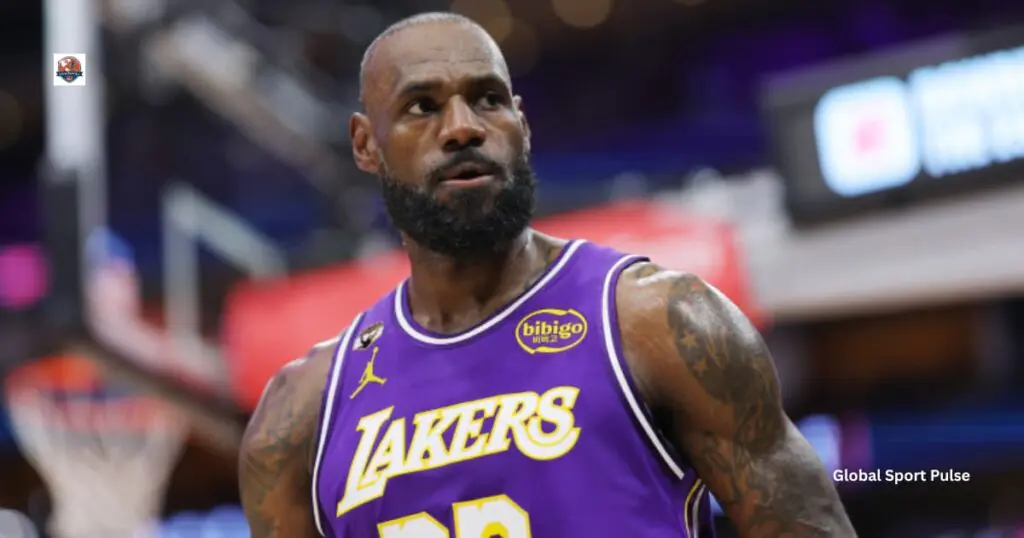
In 2010, when LeBron James joined the Miami Heat, he chose to accept less than the top figure available to him, giving Pat Riley room to assemble a roster with title-caliber depth. Miami made the Finals in 2011, then captured titles in 2012 and 2013.
However, once the 2012-13 campaign ended, Miami invoked the amnesty clause to release Mike Miller, a close friend of James and an important piece of those two championship runs. That move trimmed almost $17 million off the team’s luxury-tax bill.
Miami didn’t follow up with a major addition to fill Miller’s role. The offseason’s two most recognizable pickups were Greg Oden, a former first overall selection returning four years after he last played, and Michael Beasley, a former second overall pick arriving after a Suns buyout; both were low-cost gambles on players far less dependable than the contributor who had departed.
Miller went on to deliver 82 solid appearances for Memphis. Miami fell to San Antonio in the 2014 Finals, with thin depth among the factors. Regardless of whether Miller’s exit directly sparked it, James altered how he handled his own deals around then.
Up through 2024-25, he made sure to take every dollar up to his max, with that season as the exception when he accepted a minimal reduction so the Lakers could avoid the second apron. He even indicated he’d go lower if the club landed one of a small set of targeted free agents, such as Klay Thompson. That didn’t happen, yet the willingness fit within the broader plan he was executing.
Since departing Miami, James has structured his agreements to keep as much leverage over his franchises as possible. During his second run in Cleveland, he consistently chose shorter contracts, pressuring the Cavaliers to keep spending to improve the roster.
That degree of leverage mattered less in Los Angeles, considering the sway his agency, Klutch Sports, held with the organization via both James and fellow Rich Paul client Anthony Davis. His initial Lakers contract was a four-year maximum. Lately, he has shifted back toward shorter arrangements.
Still, the landscape changes as he approaches the 2026 free-agency window. After 23 years at the top of the game, he’s no longer the unquestioned, constant-production star who can just demand whatever contract suits him.
In a new ESPN article, Dave McMenamin reported that Lakers decision-makers would occasionally wonder what James would be worth in 2025-26 if you removed the superstar branding. The amount they arrived at, again and again, came out far below a max deal.
In a newer video segment, NBA journalist Jake Fischer took the conversation a step further. In statements relayed through Paul, James has indicated that, with his career nearing its end, winning championships is his main focus. Fischer also said that, across the NBA, many people share the view that LeBron’s smartest move would be signing for the minimum, assuming his main priority is capturing one more title.
Put together, that raises a handful of intriguing questions. What should James be valued at in reality? If he keeps playing, what is he likely to be paid? Might he ever take the minimum, and what factors would drive that decision? We’ll try to work through it.
So… what is LeBron really worth?
There’s no fully fair way to quantify it. Sporting News writer Stephen Noh built a model to approximate market-appropriate salary, and it found that James, even though he’s making $52.6 million this season, delivered something nearer $28.2 million in value.
Looking to the future, his projection—likely accounting for aging decline and increased injury risk—pegs James at roughly $21.9 million next year.
Even so, those numbers shouldn’t be treated as unquestionable fact. In practice, forcing LeBron James into a standard aging curve seems, ultimately, misguided. He hasn’t just survived time; in the playoffs, he appeared to be beating it down with a metal chair. Alperen Sengun earned $33.9 million last season.
Against the Houston Rockets, James outperformed him in basically every way. He produced more scoring and playmaking with better efficiency, defended with more impact, and ultimately carried a short-handed Lakers squad to win the series. For this year, Noh’s model rated Sengun’s value at $34.7 million.
That’s the point where the pricing becomes messy. Sengun probably delivered the better regular season. He’s an All-Star and almost two decades younger. Over an 82-game grind, that outcome makes sense. James has to manage his workload very carefully. He can’t be extraordinary on every possession the way he once could.
But if the goal is titles, and if highly paid players often shrink when the postseason begins, the fact that James still meaningfully lifts a team in the playoffs matters enormously. If you can get him through all 82 games, he’s still in the top tier of the sport. If the only target is a title right away, a team loaded with younger, cost-friendly deals could plausibly pay James more than Sengun and feel it was warranted.
The other issue is that “win immediately” is rarely the only priority, and the salary-cap rules are extremely complex, requiring constant tactical flexibility. Picture a team with lots of cap room because its best players are in the third year of rookie-scale contracts.
That space essentially disappears the next year when extensions kick in. You can use that space on someone who remains for four years, or you can sign James for one season without any built-in mechanism to replace that slot afterward. A player’s one-game impact and a player’s value within the broader challenge of team-building are not identical. For that reason, the response is context-dependent—so let’s talk about that context.
What’s the maximum LeBron can get from each team?
Any franchise with available cap room can offer James up to whatever space it has, capped by his maximum salary. If Chicago or Brooklyn decides to chase him, those clubs could top what any team other than the Lakers could put on the table. But if a title is his priority, Chicago and Brooklyn aren’t realistic landing spots.
There are five teams that keep coming up in the rumor mill, so we should examine how the money looks for each.
Even while keeping Kawhi Leonard, the Clippers could reach roughly $28 million in space without too much trouble, but they’d need to cut loose several players whose deals aren’t guaranteed. If they chose to push harder, they might do it by moving the only two older players on fully guaranteed contracts, Derrick Jones Jr. and Isaiah Jackson.
If James is focused on maximizing his check while remaining in Los Angeles, the Clippers make sense. And if Leonard gets moved, as many have suggested could happen, the Clippers could free up additional room. Still, without Leonard they’d probably be a tougher sell for James, so if they’re serious about recruiting him, they’d likely postpone any Leonard deal.
At the moment, Golden State sits at only about $20 million beneath the first apron. Since both a sign-and-trade and the non-taxpayer mid-level exception (forecast at roughly $15 million next year) impose a first-apron hard cap, that threshold becomes the key figure for most teams hoping to offer James more than the minimum. For the Warriors, much of that flexibility is expected to be used on Kristaps Porziņģis and on rounding out the back end of the roster.
Still, there are routes to cut costs. Al Horford could either retire or be dealt while on his $6 million player option. Draymond Green might also opt out, letting him reduce his 2026-27 pay in return for longer-term assurance.
So it isn’t impossible for Golden State to carve out a full mid-level exception to chase James, particularly if they clear money by moving Jimmy Butler along with draft picks to land a star (for instance, Leonard). Even so, the Warriors would clearly rather have James take the minimum. Doing that would make assembling the rest of the roster far simpler in several respects.
Cleveland would struggle to generate real breathing room under the first apron. Right now they’re about $16 million over it even before factoring in their own free agents, including Dean Wade and Keon Ellis. However, they do have James Harden’s $42 million player option to consider.
If he passed on it, the Cavaliers could sharply reduce his 2026-27 number in exchange for additional years. That helps, but finding further savings—especially meaningful savings—would likely require adding draft compensation to offload someone like Max Strus or Dennis Schröder. It can be done, though the cleaner solution would probably be a sign-and-trade with the Lakers.
The Lakers need a center, and Cleveland could ship Jarrett Allen and his $28 million salary to Los Angeles. James could then arrive via sign-and-trade on a somewhat smaller figure, whatever is necessary to keep Cleveland under the first apron once Harden’s deal is resolved. But Cleveland would rather not lose Allen, so the Cavaliers might only be interested if James is willing to sign for the minimum.
The Knicks are effectively shut out of both the sign-and-trade route and the non-tax mid-level exception lane. They’re essentially sitting at the first apron with only nine players signed, and they’ll almost certainly need to pay key reserve center Mitchell Robinson like a starter to retain him in free agency.
New York’s cap sheet was built to rise well past the second apron next season. To manufacture sign-and-trade room for James, they’d have to let Robinson walk and also include an expensive player such as Mikal Bridges in the transaction. That won’t work. If James ends up with the Knicks, it would almost certainly be on a minimum contract.
Denver is dealing with a crisis created by the second apron. They’re right at that line even before accounting for important restricted free agent Peyton Watson. If James were to join, it would have to be on the minimum. Really, anyone joining would need to do so at the minimum. Denver is expected to try to reduce payroll, if anything. They’re staring at an enormous tax payment and want to preserve a path to keeping Watson.
That brings us to the Lakers, and the situation is simultaneously straightforward and messy. They hold full Bird Rights. They can pay James any amount up to his max. From a pure dollars standpoint, that means they control the process. They can beat any competing offer.
Yet paying him that way would keep them over the cap. If the Lakers want to open the roughly $48 million in room they could potentially create, they would need to give up their rights to every one of their own free agents.
That would, of course, include James. They could still sign him again after doing that, but he would be treated like any other free agent. No special rights would remain. They could only offer whatever cap room they’ve created, the cap-room mid-level exception (projected to be a little above $9 million next season), or the minimum.
So the Lakers’ theoretical offer and their real-world offer could end up looking very different, depending on how they plan to use their space—or whether they open it at all. If they choose continuity and want to bring back this season’s roster while re-signing everyone, they can do it by staying above the cap.
If they’re aiming for significant roster overhauls, then paying James anything close to what he’s used to likely won’t be part of that plan.
What, then, is the most likely way this unfolds?
Should James depart the Lakers, the most probable result is that he signs a league-minimum deal with a different club. He might be a tightfisted billionaire, yet he remains a billionaire all the same. Having collected $581.4 million over his playing career, he sits atop the NBA’s all-time earnings list by about $80 million. Outside the venue, he has generated additional revenue as well, and his deal with Nike alone is commonly believed to be above $1 billion.
Were he to head back to Cleveland in search of title No. 5, he’d likely want Jarrett Allen there as part of the effort to win. If he links up with a veteran group like the Warriors, he’ll be fully aware that conserving assets to build out depth matters. And if New York is the destination, he’s savvy enough about perception to know he’d unquestionably be blamed if things unravel because he forced the loss of core pieces.
Top career earners in NBA history
Up to the 2025-26 NBA season, according to Spotrac
| Player | Career earnings | 2025-26 salary |
|---|---|---|
| 1. LeBron James | $581,375,548 | $52.6M |
| 2. Kevin Durant | $501,135,653 | $43.9M |
| 3. Stephen Curry | $470,141,507 | $62.6M |
| 4. James Harden | $411,670,071 | $42.3M |
| 5. Paul George | $406,203,976 | $51.7M |
Also, being willing to take the minimum provides the thing he has consistently sought in deals: bargaining power. New York is largely set as it stands, but Cleveland or Golden State—each with picks and young pieces to move plus a range of contracts to manipulate—would let him what you’re really stating is, “If I’m being asked to sign for the least amount, then I need to see you put every reasonable asset into building a lineup that can win.”
If Golden State needs to surrender several first-rounders to acquire Kawhi Leonard, James can insist they pay that price to the Clippers if they want him to sign, too. If he’s set on sharing a floor with Giannis Antetokounmpo, he can push Cleveland toward putting Evan Mobley on the table.
On a minimum contract, James creates enormous excess value between his on-court impact and the likely revenue surge tied to staging his farewell season, so front offices would probably be quite receptive to what he asks. He can wield that influence to make sure whichever team he chooses is as close as possible to fully committing to 2026-27.
Los Angeles is not fully committed to 2026-27. James already understood that a year back, when the public statement from Paul made clear the franchise’s now-recognized focus on operating on Luka Dončić’s schedule. Seen that way, James likely isn’t particularly motivated to do the Lakers any favors.
A representative not affiliated with James told McMenamin that the Lakers can’t merely present James with a figure; they need to explain what that figure represents. He added that any strategy tied to taking less would need to make sense as a whole.
If the Lakers intend to bring back the same group from last year, there’s honestly no on-court justification for James to accept a major reduction. They possess the Bird Rights necessary to pay their guys, and they won’t be hard-capped at either apron unless they deliberately take action that triggers it.
James isn’t going to bend over backward to reduce the Lakers’ tax bill. Without meaningful improvements to the team, he would expect compensation that reflects his true value.
If the Lakers float either a minimum deal or a cap-room mid-level exception, it likely must be paired with meaningful improvements. They’re able to open roughly $48 million in cap room, and they hold three tradable first-rounders.
Trying to win immediately and planning for later do not have to conflict. Those assets can be used to chase strong contributors still in their 20s. James is adaptable enough on the court that, in theory, he fits with nearly anyone.
If that maneuvering is spent on a star, or maybe several defense-first, do-the-grunt-work types, they could plausibly approach James and say they’re giving him a genuine shot at a title. With the life he has built in Los Angeles, a sizable cut could then feel reasonable.
The same leverage logic remains in place. If the Lakers want him to grant them the favor of a big reduction, they must answer by using that benefit to provide him real championship value.
James has worn a Lakers uniform for eight seasons. A relationship doesn’t run that long without bumps along the way. Los Angeles hasn’t done anything as outrageous as Miami cutting Miller, but the complaints are still understandable.
McMenamin reported that James feels the Lakers treat him as a given. The dollars may not carry much weight for him now, yet what they signal probably does. Because it speaks to his standing on the roster and across the league, if the Lakers are going to request a significant cut, they’ll have to make it worthwhile for him.
