

A Blowout That Shifted the Series Momentum
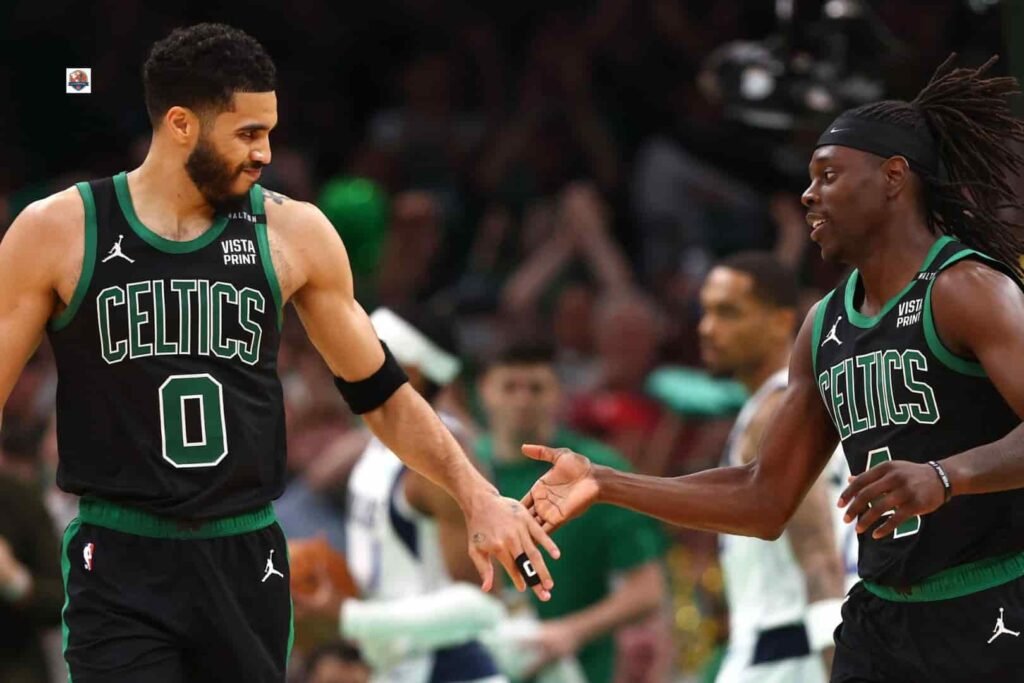
This wasn’t just another playoff game—it felt like a statement stamped in bold ink. The Boston Celtics didn’t merely beat the Philadelphia 76ers in Game 4; they overwhelmed them with a level of offensive firepower and bench production that left no doubt about who controlled the series momentum. Even with Joel Embiid making a dramatic return just 17 days after an appendectomy, Philadelphia found itself swallowed by Boston’s pace, spacing, and ruthless shot-making.
The final score, 128–96, tells only part of the story. What stood out more was how early the Celtics dictated everything—tempo, shooting rhythm, and defensive pressure. By halftime, the Sixers were already chasing a game that felt out of reach. For a playoff series that once looked competitive, Game 4 felt like a turning point where one team discovered another gear while the other struggled to keep up physically and tactically.
Celtics: Game Snapshot – Final Score and Key Numbers
The Celtics’ dominance wasn’t accidental. It was built on shooting efficiency, bench scoring, and relentless perimeter execution. Boston hit a franchise playoff record 24 three-pointers, turning the game into a spacing nightmare for Philadelphia’s defense. Every rotation mistake from the Sixers was punished instantly.
Philadelphia, meanwhile, struggled to match that offensive rhythm. Even Embiid’s return couldn’t stabilize their system, as Boston consistently stretched the floor and forced mismatches. The 32-point margin reflected not just scoring gaps but structural imbalance across both rosters.
Quarter-by-Quarter Breakdown
Boston set the tone immediately with a 34–18 first quarter, establishing control before Philadelphia could settle. The second quarter was more balanced, but the damage was already done. In the third, the Celtics exploded again with nearly 40 points, essentially ending any comeback hopes. The final quarter turned into a controlled finish where Boston rested key players and maintained a comfortable lead.
Key Statistical Highlights
- Celtics bench: 55 points
- 76ers bench: 24 points
- Celtics 3PT shooting: elite efficiency, record volume
- Embiid: 26 points in return game
- Tatum: near triple-double performance
- Maxey: solid but isolated scoring support
Payton Pritchard’s Breakout Masterclass
If there was one storyline that defined the night, it was Payton Pritchard turning into an unstoppable offensive spark plug. Coming off the bench, he didn’t just contribute—he reshaped the entire flow of the game.
First-Quarter Explosion
Pritchard scored 13 points in the opening quarter alone, immediately forcing Philadelphia into uncomfortable defensive rotations. His confidence was obvious from the start, and his ability to pull up off the dribble or relocate behind the arc kept the defense constantly guessing. By the time the first quarter ended, the Celtics had already built a double-digit cushion, and Pritchard had become the emotional engine behind it…Read more
Bench Impact and Shot Creation
What made Pritchard special wasn’t just scoring—it was timing. Every time Philadelphia tried to close the gap, he responded with a three-pointer or a quick burst drive. His off-ball movement also forced Embiid and others into uncomfortable defensive positions, stretching a team already dealing with fatigue from his return. It was the kind of performance that doesn’t just fill the box score—it breaks defensive schemes.
Celtics Bench Dominance
Boston didn’t win this game only because of stars like Tatum or Brown. They won because their entire roster contributed at a higher level, especially the second unit.
Historic Scoring Output
The Celtics’ bench outscored Philadelphia’s reserves by more than 30 points, creating a gap that essentially decided the game before the fourth quarter. This kind of production is rare in playoff basketball, where rotations tighten and bench units often struggle.
Tactical Advantages Over Philadelphia Reserves
Boston’s bench didn’t just score—they pressured. Whether it was transition shooting or forcing defensive mismatches, the Celtics reserves consistently exploited slower Philadelphia rotations. That difference allowed Boston’s starters to rest while still extending the lead.
Joel Embiid’s Emotional Return
All eyes were on Joel Embiid, and understandably so. Returning from surgery in under three weeks is no small feat, especially in a playoff environment.
Strong Offensive Start
For a brief moment, Embiid looked dominant. He scored Philadelphia’s first eight points and immediately energized the crowd. His presence alone created spacing changes and gave the Sixers a psychological boost early.
Fatigue and Defensive Limitations
However, as the game progressed, fatigue became clear. Embiid struggled to defend in space, particularly against Boston’s perimeter-heavy offense. The Celtics repeatedly pulled him into difficult pick-and-pop situations, exposing mobility concerns. Offensively, he remained productive, but it came in isolation rather than flow-based execution.
Tyrese Maxey’s Effort in a Losing Battle
Tyrese Maxey contributed 22 points, showing flashes of aggression and speed. But the Celtics were prepared to limit his transition impact. Most of his scoring came in controlled half-court sets rather than explosive runs. Without consistent secondary support, his efforts weren’t enough to shift momentum.
Jayson Tatum and Jaylen Brown Control the Flow
Even when they weren’t dominant early, Boston’s stars always found ways to assert control.
Third Quarter Takeover
The defining moment came in the third quarter when Tatum and Brown combined to score Boston’s first 22 points of the half. This surge completely erased any lingering hope of a Philadelphia comeback. Tatum’s playmaking also stood out, finishing with double-digit assists and nearly recording a triple-double.
Celtics Three-Point Barrage Record Night
Boston’s perimeter shooting wasn’t just good—it was historic. Setting a franchise playoff record with 24 made threes, they stretched Philadelphia’s defense beyond repair. Every defensive collapse was punished immediately, making it impossible for the Sixers to recover strategically.
Defensive Breakdown for the 76ers
Philadelphia’s defensive system struggled to contain both transition and perimeter threats. Embiid’s presence helped inside but created spacing issues outside. The Celtics consistently forced switches and exploited slow recoveries, turning defensive stops into instant points.
Coaching and Tactical Adjustments
Boston’s coaching staff clearly prepared for Embiid’s return by spreading the floor and increasing tempo. Philadelphia, on the other hand, struggled to adjust once defensive breakdowns began piling up. The lack of effective counter-tactics made the game spiral quickly.
Momentum Shift in the Series (3–1 Context)
With the Celtics now leading 3–1, the series heavily tilts in their favor. Historically, teams in this position advance the vast majority of the time. Philadelphia now faces elimination pressure and must find solutions quickly or risk ending their season early.
What This Means for Game 5
Game 5 shifts back to Boston, where momentum and crowd energy heavily favor the Celtics. If Philadelphia wants to extend the series, they’ll need improved defensive discipline, better bench production, and a more balanced offensive structure that doesn’t over-rely on Embiid.
onclusion
Game 4 wasn’t just a win—it was a basketball statement from Boston. Between Pritchard’s breakout, Tatum’s orchestration, and a record-setting shooting night, the Celtics displayed championship-level depth and execution. For Philadelphia, Embiid’s return provided hope but also exposed limitations in rhythm, conditioning, and defensive spacing. The series now stands at a critical breaking point where Boston holds control, and the Sixers must respond or bow out…Read moe
FAQs
Why did the Celtics win so easily?
Because they dominated bench scoring, three-point shooting, and controlled tempo from the first quarter onward.
Was Embiid fully fit?
No, he was returning from appendectomy surgery and showed signs of fatigue, especially on defense.
What made Pritchard so effective?
His shooting timing, off-ball movement, and confidence in high-pressure moments.
Can the Sixers still come back?
Yes, but they must win consecutive elimination games and fix defensive breakdowns quickly.
What is the biggest takeaway from Game 4?
Boston’s depth and shooting efficiency are overwhelming Philadelphia’s defense and conditioning.
