

As we delve into the fascinating world of football, one question stands out: japan world cup? The answer is Akira Nishino, a name that resonates with both fans and analysts alike. Appointed just two months before the tournament, Nishino took the reins at a crucial time for the team.
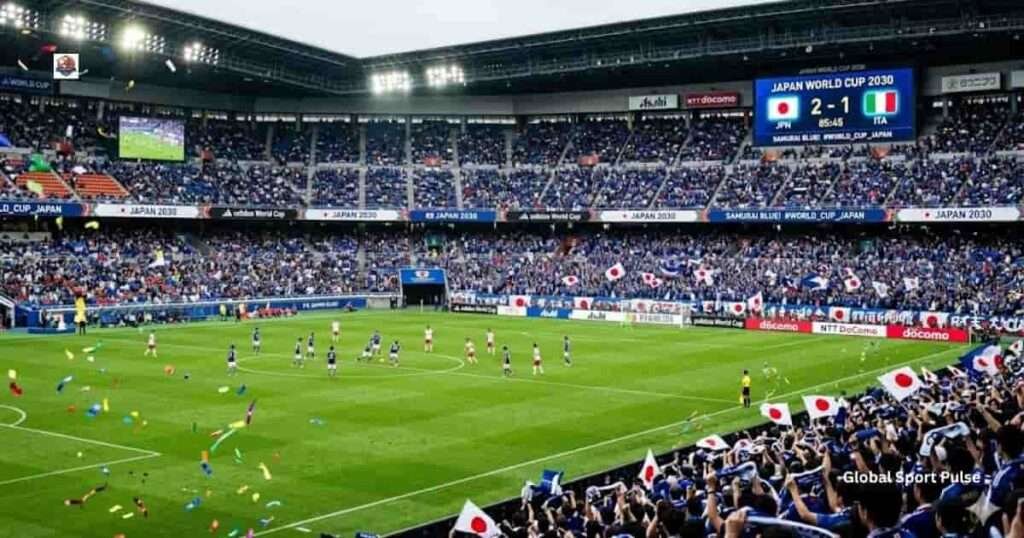
This coaching change marked a significant moment in Japan’s football history. The Japan Football Association made a bold decision to replace Vahid Halilhodžić, a move that stirred discussions among fans and experts. Nishino inherited a squad filled with seasoned players like Keisuke Honda and Shinji Kagawa, but he had little time to prepare.
Understanding Nishino’s role is vital, as his strategies shaped every match and influenced the team’s unexpected journey to the knockout stage. From a stunning victory over Colombia to a heartbreaking loss against Belgium, each game under his leadership left a mark on the tournament. This guide will explore the coach’s impact, the team’s performance, and the legacy of their remarkable run.
Understanding the 2018 FIFA japan world cup Context and Coaching Situation
Before the tournament kicked off, the national team faced a unique set of challenges. Japan had qualified for their sixth consecutive world cup appearance, and expectations were high. This came after a solid qualifying campaign under Vahid Halilhodžić.
The squad featured a core of experienced players, including Keisuke Honda, Shinji Kagawa, and captain Makoto Hasebe. Their presence brought a sense of familiarity and hope to fans. However, this optimism was soon overshadowed by a shocking decision.
In April 2018, just two months before the 2018 FIFA World Cup was set to begin in Russia, the Japan Football Association made the bold move to dismiss Halilhodžić. This decision stirred controversy among fans and analysts alike.
Reportedly, communication breakdowns between the coach and key players contributed to his dismissal. Additionally, disappointing results in friendly matches raised concerns about the team’s readiness for the tournament.
At this critical juncture, Akira Nishino, who had been serving as the technical director of the Japan Football Association, was suddenly promoted to head coach. This unexpected change placed immense pressure on him.
Nishino had only a handful of training sessions and two friendly games to prepare the team for the world cup. The public and media expressed skepticism about whether he could unify the squad and deliver results.
This was not Nishino’s first involvement with Japanese football. He had previously managed the Japan U-23 team at the 1996 Olympics and enjoyed a successful club career with Gamba Osaka.
Reflecting on this chaotic coaching situation, it became clear that it set the stage for one of the most compelling underdog stories of the entire tournament.
Who Was Japan’s Coach During the 2018 FIFA World Cup: Meet Akira Nishino
To appreciate the national team’s journey, we must look closely at Akira Nishino’s background. Born on April 7, 1955, in Saitama, Japan, Nishino carved out a successful career as a midfielder. He played for Hitachi from 1978 to 1990, making 143 appearances and scoring 29 goals. His dedication to the sport was evident early on, as he earned 12 caps for the national team between 1977 and 1978, netting one goal.
After retiring in 1990, Nishino transitioned into coaching. He began with youth national teams, notably leading the Japan U-23 squad to qualify for the 1996 Summer Olympics. This marked a significant achievement, as it was Japan’s first appearance in the Olympics in 28 years.
Nishino’s managerial career flourished at Gamba Osaka, where he enjoyed a decade-long tenure. Under his leadership, the team clinched the J.League Division 1 title in 2005 and the AFC Champions League in 2008. He also guided Gamba Osaka to victory in the Emperor’s Cup in 2008 and 2009. His success earned him the title of AFC Coach of the Year in 2008, showcasing his capabilities as a football leader.
In March 2016, Nishino returned to the Japan Football Association as technical director. This role positioned him perfectly to step into the head coach position when the unexpected crisis arose in April 2018. His appointment came as a surprise, sparking mixed reactions from the public and media.
While some fans expressed skepticism about his ability to stabilize the team, others recalled his impressive club achievements. At 63 years old, Nishino brought a wealth of experience to the world stage, even though he had never managed a senior national team at a major tournament before.
Reflecting on his calm demeanor and deep understanding of Japanese football culture, it became clear that Nishino was uniquely suited to unite the team in a time of crisis. His leadership would play a crucial role in shaping the national team’s journey through the tournament.

Leadership Style and Strategies of Akira Nishino in the 2018 FIFA World Cup
In the high-stakes environment of the 2018 FIFA World Cup, Akira Nishino’s coaching strategies were put to the ultimate test. His leadership style was characterized by a blend of tactical awareness and a deep understanding of his players’ strengths. This approach proved essential in guiding the national team through a challenging tournament.
Key tactical decisions and team selection under Nishino
Nishino’s team selection was bold and strategic. He built the squad around experienced players like Keisuke Honda, Shinji Kagawa, and Yuto Nagatomo. This choice reflected his trust in their ability to handle pressure during crucial moments.
In the opening match against Colombia, Nishino’s aggressive tactics paid off quickly. Kagawa scored a penalty just three minutes in, leading to a historic 2-1 victory, marking the first defeat of a CONMEBOL team by an Asian side.
Highlights of Japan’s World Cup matches: from Colombia to Belgium
Against Senegal, the team showcased remarkable resilience. Goals from Inui and Honda kept Japan’s knockout stage hopes alive, resulting in a thrilling 2-2 draw. However, the final group match against Poland was controversial. Nishino made six changes to the lineup, and despite losing 0-1, Japan advanced to the knockout stage due to fewer yellow cards than Senegal.
In the Round of 16, Japan stunned the world by taking a 2-0 lead against Belgium, thanks to goals from Haraguchi and Inui. Unfortunately, they lost 3-2 after a dramatic comeback from Belgium.
The role of discipline, fairness, and adaptability in progression to the knockout stage
Nishino instilled tactical discipline and adaptability in his players. This mindset allowed Japan to become the only Asian team to reach the Round of 16 at the 2018 FIFA World Cup. His strategies, while unconventional at times, demonstrated that a coach with a clear vision could achieve remarkable results, even with limited preparation time.
Lessons I learned observing Nishino’s coaching approach
Observing Nishino’s coaching style taught me valuable lessons. His calmness under pressure, willingness to make bold lineup changes, and ability to unite a team in crisis were particularly inspiring. These qualities highlight how effective leadership can shape a team’s performance on the world stage.
| Match | Result | Key Players | Highlights |
|---|---|---|---|
| Japan vs. Colombia | 2-1 | Kagawa, Osako | Early penalty and winning goal from a corner |
| Japan vs. Senegal | 2-2 | Inui, Honda | Two crucial equalizers |
| Japan vs. Poland | 0-1 | N/A | Six changes made, advanced on fair play points |
| Japan vs. Belgium | 2-3 | Haraguchi, Inui | Stunning lead before a comeback |
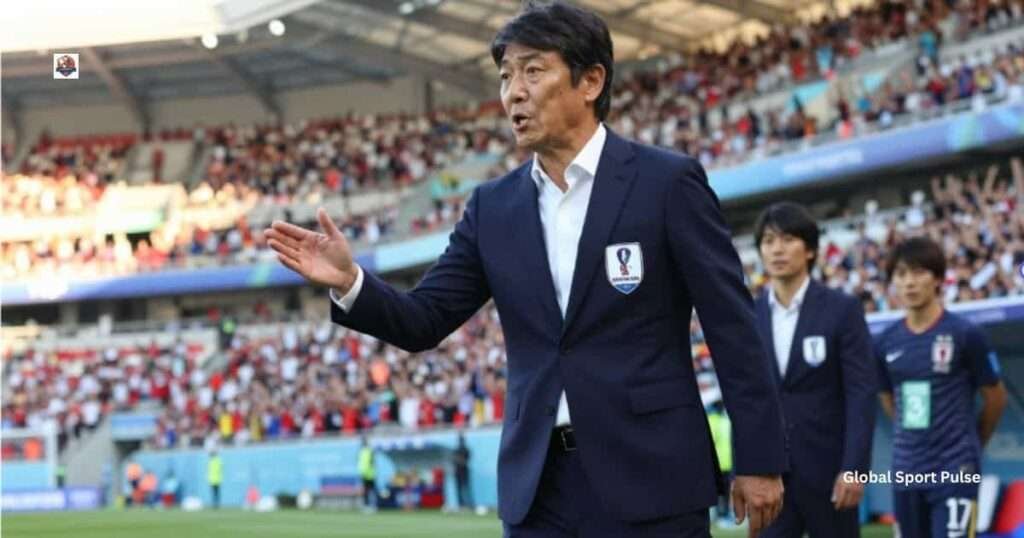
Conclusion: Reflecting on Akira Nishino’s Impact and Legacy in the 2018 FIFA World Cup
Reflecting on the journey of Akira Nishino reveals a story of resilience and growth. He took over a team in turmoil just two months before the tournament and guided them to become the only Asian team to reach the knockout stage. This achievement changed perceptions of Asian football.
Japan’s thrilling performance, especially against Belgium, showcased their potential and earned respect from fans worldwide. After the tournament, Nishino stepped down, paving the way for new leadership. However, his influence on the players and the program remains undeniable.
Nishino’s success opened doors internationally, as he became the first Japanese to manage the Thailand national team. His coaching philosophy emphasized trust in experienced players and maintaining tactical discipline under pressure. Ultimately, his story is a testament to adaptability and the power of believing in one’s team.
Let us remember Akira Nishino not just as a last-minute replacement, but as a coach who made history and left a lasting legacy in football.
FAQ
Who was the head coach of Japan’s national team in 2018?
The head coach was Akira Nishino, who took over just before the tournament began.
What challenges did Akira Nishino face as the coach?
He had to quickly adapt to the team’s dynamics and implement his strategies within a short timeframe.
How did the team perform under Nishino’s leadership?
The team showed resilience, making it to the knockout stage, with notable matches against Colombia and Belgium.
What was Nishino’s coaching style like?
His approach emphasized discipline, adaptability, and fairness, which resonated well with the players.
How did fans and media react to Nishino’s appointment?
Reactions were mixed, with some expressing skepticism due to the timing of his promotion.
What lessons can be learned from Nishino’s coaching methods?
Observing his approach taught me the importance of adaptability and strong leadership in high-pressure situations.
