

LeBron James is not just playing basketball at 41. He is rewriting what it means to age in professional sport — conducting games like a symphony, rationing brilliance with surgical precision, and buying precious time for a Lakers team desperately in need of reinforcements.
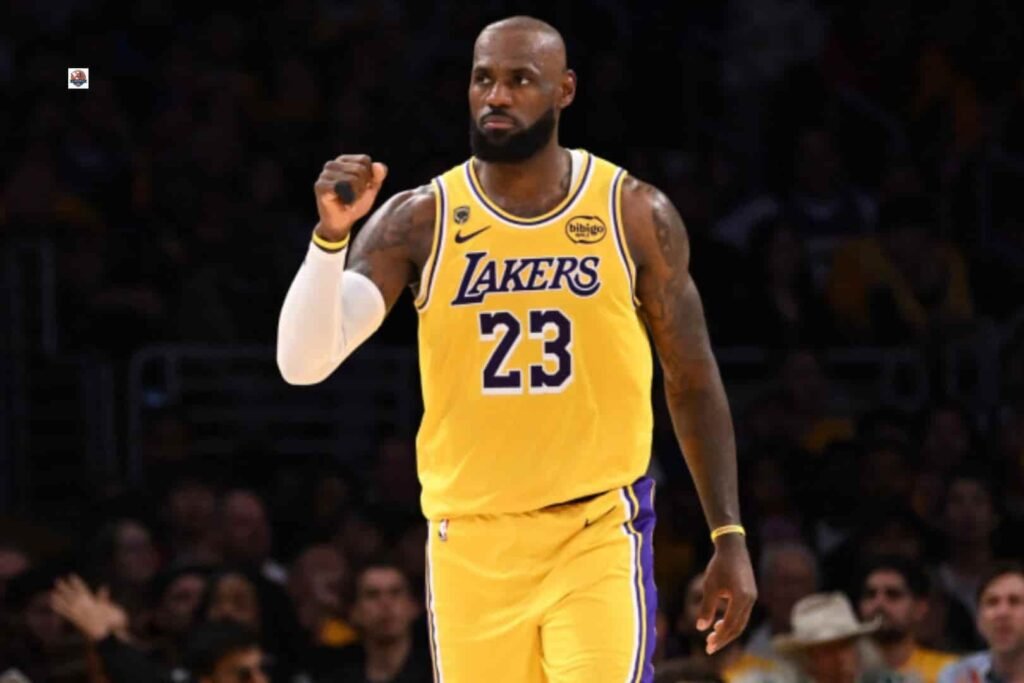
The Ageless Wonder: How LeBron James Continues to Defy Logic
Father Time has never lost. It is the single undefeated force in all of professional athletics, a conqueror of legends, a thief of greatness. And yet — somehow, stubbornly, brilliantly — LeBron James keeps forcing a draw.
Twenty-three years into a career that has reshaped the NBA, LeBron James entered the 2025 playoffs not as a relic of a golden era, but as the last man standing between the Los Angeles Lakers and early elimination. With Luka Dončić sidelined by a Grade 2 hamstring strain and Austin Reaves nursing a Grade 2 oblique injury, James faced an almost impossible task: carry an undermanned Lakers squad deep enough into the postseason for help to arrive.
He didn’t try to be 25 again. He did something far more difficult. He was better than 25.
What Makes LeBron James Different From Every Other Aging Athlete?
Most athletes decline physically. Their legs lose the spring. Their first step slows. The gap between intent and execution widens with every passing season. LeBron James is experiencing all of this — and it doesn’t matter.
Why? Because what separates LeBron James from virtually every competitor who has ever laced up sneakers is not raw athleticism. It never was, not truly. It’s the mind. The processing speed. The ability to read a defense before it reads itself.
“He will be able to make the passes he made on Saturday until he’s 50. He doesn’t need a burst to bully smaller defenders in the post.”
That is not hyperbole. That is scouting. LeBron James has developed a level of basketball IQ so refined, so deeply encoded, that physical decline becomes almost irrelevant. He manipulates space. He conducts possessions. He turns a basketball court into a chess board and has already seen every position twenty moves ahead.
Short sentence. Long career. Timeless basketball.
Game 1 Against Houston: Not “Everything” — But Everything That Mattered
When asked what the Lakers needed from him with their stars sidelined, LeBron James had one answer: “Everything.”
Game 1 against the Houston Rockets told a different, more nuanced story. He finished with 19 points, 13 assists, 8 rebounds, 2 steals, and a block. He led the Lakers in on-court point differential at plus-11. By any objective measure, it was a spectacular performance — a masterclass in efficient, controlled domination. And yet he took only 15 shots.
The Art of Rationing Brilliance
Since joining the Lakers, LeBron James had taken 15 or fewer shots in only two other playoff games decided by single digits. Game 1 against Houston was a deliberate choice. A strategic conservation of energy. He wasn’t saving himself because he was tired. He was saving himself because he understood — with the clarity that only experience brings — that there are harder games coming.
Consider the breakdown of those 13 assists:
| Assist Type | Count | Significance |
| Pick-and-roll ball handler | 3 | Minimal physical expenditure |
| Post-up playmaking | ~6 | Back to basket, reading the floor |
| Transition plays | ~4 | Minimal hard drives |
| Free throws made | 0 | Near-zero physical tax |
The pattern is clear. LeBron James spent the bulk of Game 1 with his back to the basket, operating as a floor general rather than a one-man wrecking crew. He hid on Jabari Smith Jr. defensively — a smart tactical decision — and let the Rockets’ toothless offense do the heavy lifting of keeping his energy reserves full.
The Bigger Battle: Racing Against Time and Injury
Here is the brutal arithmetic of the Lakers’ situation. Dončić’s Grade 2 hamstring strain typically demands more than a month of recovery. Reaves is on a four-to-six week timeline. The playoffs do not pause for rehabilitation. The Houston Rockets, even without Kevin Durant nursing a knee injury, remain a formidable, physical opponent that will adjust.
LeBron James knows all of this. He is not deluded. He is not playing as though he believes this Lakers team — in its current form — can win a championship. He is playing for something smaller and simultaneously far more meaningful: time.
Every win is another few days for Dončić and Reaves. Every win is a percentage point of probability that the cavalry arrives before the war is lost. Every win is another quiet rebuke of the narrative that LeBron James should be winding down, accepting limitations, preparing for the end.
H2: LeBron James and the Mental Mastery No Decline Can Touch
The Passing Vision That Defies Physics
In those 13 assists against Houston, only three came from traditional pick-and-roll ball-handling — the most physically demanding playmaking role in basketball. The rest came from a quieter, stranger kind of genius. Reading. Waiting. Seeing.
LeBron James backs down a smaller defender in the post. The defense collapses. He doesn’t hesitate. The pass is already out before the double-team fully forms, threading through a gap that most players wouldn’t identify until half a second after it closes. That half-second — the gap between what he sees and what everyone else sees — is not shrinking with age.
It might be growing.
Why Father Time Cannot Beat What He Cannot Touch
The tragic irony of athletic greatness is that the physical gifts — the explosiveness, the recovery, the burst — are temporary. The mind that learns to use those gifts? That can outlast the body by decades.
LeBron James has spent 23 years in the NBA learning exactly where defenders cheat, exactly when a defense rotates late, exactly how much pressure to apply before a seam opens in an opposing scheme. That knowledge does not atrophy. It accumulates. It compounds.
His understanding of how to manipulate and ultimately undo opposing defensive principles — not just as a passer but as a conductor of entire possessions — is as close to eternal as basketball allows.
Key Takeaways: What Game 1 Against Houston Tells Us About LeBron James
- LeBron James does not need to be the 2016 version of himself to be the most impactful player on the court.
- Strategic energy conservation is not a limitation — at 41, it is a superpower.
- The mental component of his game has achieved a level of mastery that is, functionally, immune to physical decline.
- The Lakers’ playoff hopes hinge on how long LeBron James can keep them afloat while Dončić and Reaves recover.
- Even as a likely underdog (+185 at DraftKings following Game 1), the Lakers remain dangerous as long as LeBron James is standing.
Will There Be an “Everything” Game?
The honest answer is: probably yes. And probably exactly once or twice. The Rockets will adjust. Kevin Durant will return. There will be a game — perhaps Game 3, perhaps Game 4 — where LeBron James will need to reach back into the reserves and produce something that looks, briefly, impossibly, like 2018.
Whether he can sustain that over an entire series is a different question entirely. He is not his younger self. He cannot will teams through entire postseason runs in his 40s with the brute force of a younger king. The regular season offers mixed signals. His three best games in April came against weak opponents. When the roster was healthy, he happily settled into a reduced role.
But none of that erases what Game 1 was. It was a reminder that LeBron James has engineered a second, quieter form of greatness — one built not on what he can still do physically, but on what he has learned to do with everything he has left.
FAQ: LeBron James and the 2025 Playoffs
Q: Can LeBron James win the series against Houston without Dončić and Reaves? It is unlikely. The Lakers are listed as significant underdogs, and the Rockets will make adjustments. James needs at least one or two teammates back to have a realistic shot.
Q: What injury is keeping Luka Dončić out? Dončić is dealing with a Grade 2 hamstring strain, which typically requires more than a month of recovery.
Q: How many points did LeBron James score in Game 1 against Houston? LeBron James scored 19 points to go along with 13 assists, 8 rebounds, 2 steals, and a block in a 107-98 Lakers victory.
Q: Is LeBron James still considered a superstar at 41? His classification may be evolving — but his impact on winning basketball is not. His basketball IQ and playmaking remain elite, regardless of how his scoring numbers have changed.
Q: Has LeBron James talked about retirement? Retirement rumors have grown louder recently, though LeBron James has not officially announced any decision. Reports suggest that even when he does retire, his physical decline will likely lag behind that announcement by several years.
A Legacy Written in Real Time
LeBron James may not win this series. He may not win another championship. Father Time, undefeated as ever, will eventually claim his final victory. But what LeBron James is doing right now — methodically, brilliantly, beautifully — is not the death rattle of a great career.
It is something rarer. It is mastery. A type that doesn’t rely on a sudden burst of speed to make a play. The kind that sees the pass before the defense decides to help. The kind that rations a game like a resource, spending only what must be spent, saving everything else for when it matters.
He will ultimately reach a point where he’s no longer able to compete in the NBA due to age. But based on what Game 1 against Houston showed the world, that will happen several years after he actually retires. As long as LeBron James keeps choosing to compete, he is not just fighting Father Time.
He is teaching the rest of us what it looks like when someone refuses to lose.
Keywords: LeBron James, Lakers playoffs, LeBron James age, LeBron James 2025, LeBron James Houston Rockets, Father Time NBA..Read more
